The Coldest Places Where People Actually Live
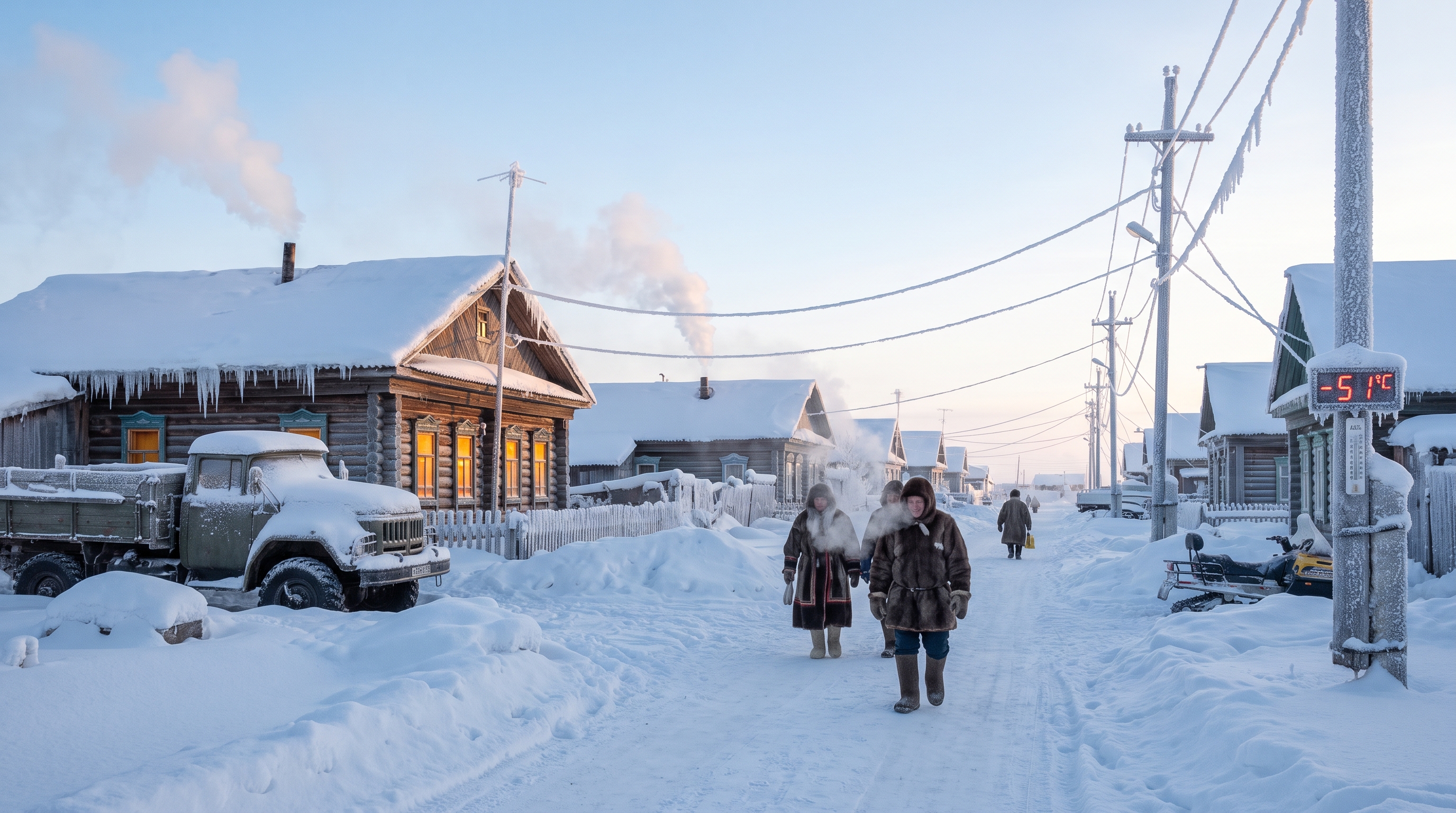
When most people think of extreme cold, they imagine empty landscapes covered in snow and ice. But in some of the coldest regions on Earth, people live, work, go to school and continue their daily lives despite temperatures that can fall far below freezing.
From remote Siberian villages to communities in northern Canada, these places show just how adaptable humans can be.
Oymyakon, Russia
Oymyakon is widely known as one of the coldest permanently inhabited places on Earth. Located in Russia's Sakha Republic, the village has experienced temperatures below −60°C (−76°F).
Winter conditions are extremely harsh. Cars can be difficult to start, water can freeze quickly, and residents have to take special precautions when spending time outdoors.
Despite the extreme weather, Oymyakon is home to a permanent community that has adapted to life in one of the world's coldest environments.
Verkhoyansk, Russia
Another extremely cold inhabited settlement is Verkhoyansk, also located in the Sakha Republic.
The region experiences enormous temperature differences between winter and summer. During the coldest periods, temperatures can fall below −50°C (−58°F).
People living here have developed routines designed around the climate. Buildings, vehicles, clothing and heating systems all need to withstand extreme winter conditions.
Yakutsk, Russia
Yakutsk is one of the world's coldest major cities. Unlike tiny remote villages, it has a population of hundreds of thousands of people.
Winter temperatures regularly fall far below freezing, and temperatures around −40°C (−40°F) are possible.
Life continues despite the cold. Schools, businesses, public transportation and other services operate in conditions that would be considered extraordinary in many other parts of the world.
Norilsk, Russia
Norilsk is another major city known for its severe Arctic climate. It is located far north of the Arctic Circle.
Winters are long and extremely cold, while strong winds can make the conditions feel even harsher.
The city is also one of the world's northernmost large settlements, making everyday life there very different from life in most cities.
Utqiagvik, Alaska
Utqiagvik, formerly known as Barrow, is one of the northernmost communities in the United States.
Located on Alaska's Arctic coast, the town experiences long, dark winters and freezing temperatures. During part of the year, the sun does not rise above the horizon for weeks.
Residents have adapted to the Arctic environment through specialized buildings, clothing, transportation and community infrastructure.
Snag, Yukon, Canada
Snag, in Canada's Yukon territory, is famous for recording one of the lowest temperatures ever measured in North America.
In February 1947, the temperature reportedly dropped to approximately −63°C (−81°F).
Snag is not a large modern city, but its extreme temperature record demonstrates how severe winter conditions can become in Canada's northern regions.
How Do People Live in Such Extreme Cold?
Living in extreme cold requires preparation.
Homes need reliable heating and strong insulation. Vehicles may require special equipment to function in very low temperatures. People also need specialized clothing to protect themselves from frostbite and hypothermia.
Food, fuel and other essential supplies can also be more difficult to transport, especially in remote communities.
Yet these places are not simply frozen wastelands. They are homes to families, workers, children and entire communities that have learned to live with conditions that seem impossible to many people.
A Remarkable Example of Human Adaptation
The coldest inhabited places on Earth are a reminder of how adaptable humans can be.
While temperatures below −50°C may seem unimaginable, people living in these regions have developed ways to work, travel, study and build communities in some of the harshest environments on the planet.
For them, extreme cold is not just a record in a weather report. It is part of everyday life.