How Does Artificial Intelligence Actually Work?
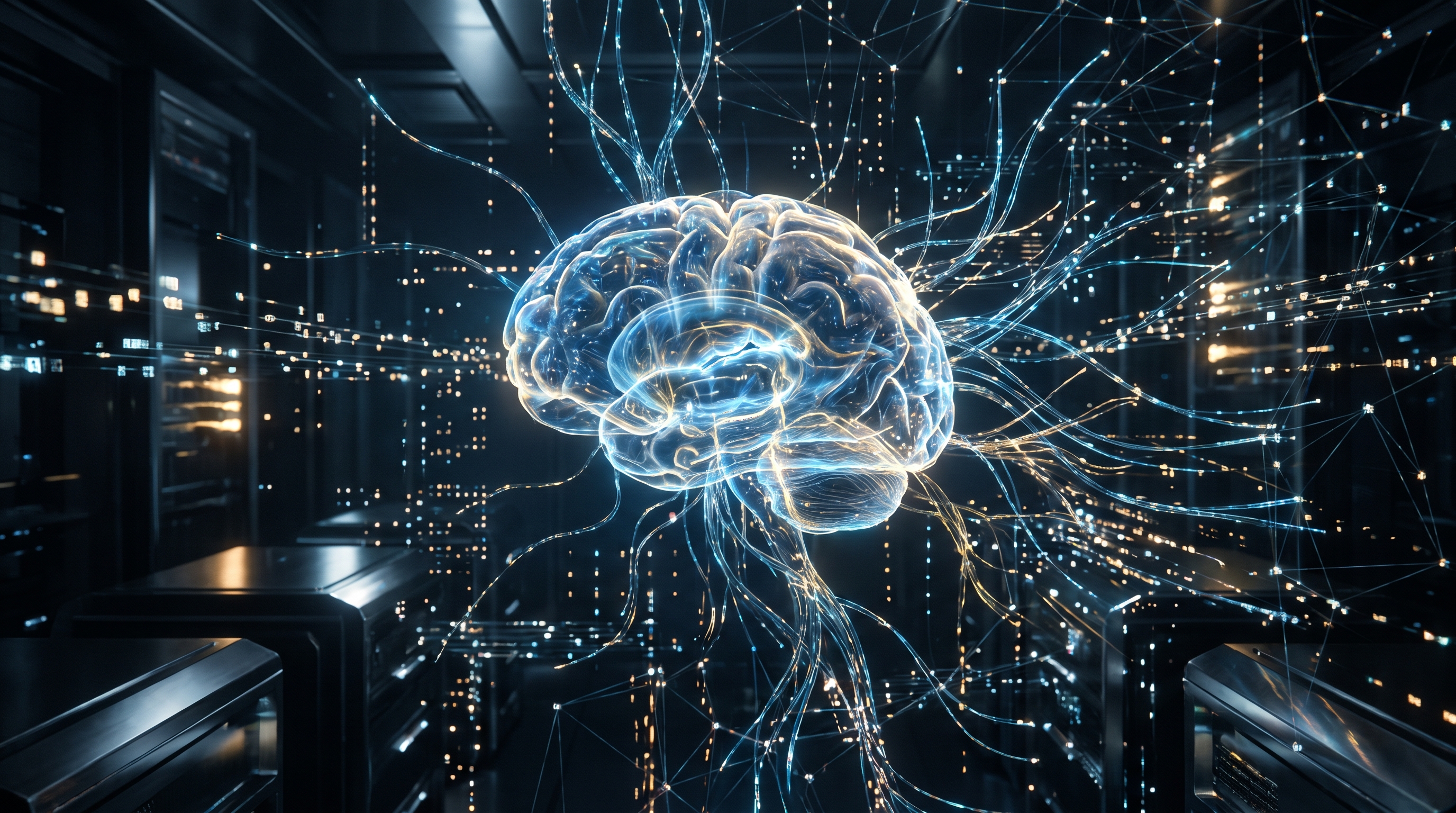
Artificial intelligence, or AI, has quickly become part of everyday life. It helps people search for information, translate languages, recognize faces, recommend videos, generate images and even drive some vehicles.
But how does artificial intelligence actually work?
The answer begins with data, algorithms and powerful computer systems.
What Is Artificial Intelligence?
Artificial intelligence is a technology that allows computers to perform tasks that normally require human intelligence.
These tasks can include recognizing images, understanding language, finding patterns, making predictions and solving problems.
AI does not think exactly like a human. Instead, it uses mathematical models and large amounts of data to identify patterns and produce useful results.
AI Starts With Data
Data is one of the most important ingredients in modern AI.
For example, if developers want to create an AI system that can recognize cats, the system can be trained using a large collection of images.
The images contain examples of cats with different shapes, colors, sizes and backgrounds.
By analyzing many examples, the AI model can learn patterns that help it identify a cat in a new image.
What Is Machine Learning?
A major part of modern artificial intelligence is called machine learning.
Instead of programming a computer with every possible rule, developers give the system data and a method for finding patterns.
The model adjusts itself during training so that its predictions become more accurate.
For example, an email system can analyze millions of messages and learn which characteristics are commonly associated with spam.
Over time, it can become better at identifying unwanted messages.
Neural Networks
Many modern AI systems use artificial neural networks.
These systems are loosely inspired by the way biological brains process information, although they are not actual copies of the human brain.
A neural network contains layers of mathematical operations. Information passes through these layers, and the system gradually learns which patterns are important.
Deep neural networks contain many layers and can process extremely complex information.
How Does ChatGPT Work?
AI language models such as ChatGPT are trained on very large amounts of text.
During training, the model learns statistical relationships between words, phrases and other pieces of information.
When a user enters a question, the model processes the text and generates a response based on patterns it learned during training.
It does not simply search a database and copy an answer. Instead, it generates text step by step.
Why Does AI Sometimes Make Mistakes?
AI systems can be extremely powerful, but they are not perfect.
A model may produce incorrect information, misunderstand a question or confidently generate an answer that sounds convincing but is wrong.
This can happen because AI learns patterns from data rather than possessing human-like understanding of the world.
The quality of the data and the way the model was trained also affect its performance.
How Does AI Recognize Images?
Image-recognition systems analyze visual information as numerical data.
A photograph can be represented by millions of individual pixels. AI models process these patterns and can learn to identify shapes, textures, colors and objects.
After training on many examples, a model may be able to recognize objects such as cars, animals, people or buildings in new images.
How Does AI Learn?
AI models do not learn in exactly the same way humans do.
During training, a model makes predictions and compares them with expected results. Mathematical methods are then used to adjust the model's internal parameters.
This process can happen millions or even billions of times.
With enough training and appropriate data,