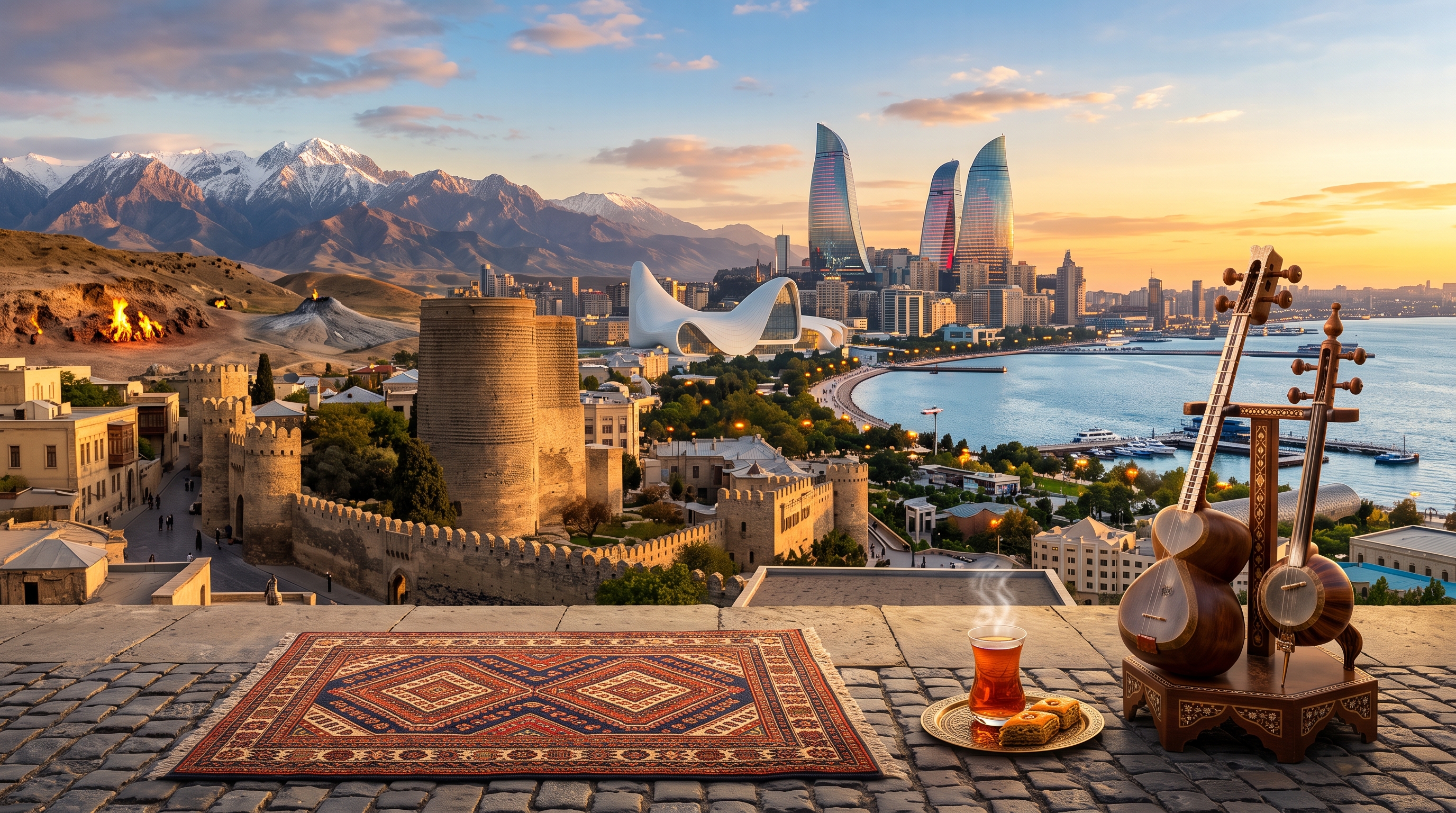
Azerbaijan is a country where ancient traditions, dramatic landscapes, rich cuisine and modern architecture come together. Located between Europe and Asia, on the western shore of the Caspian Sea, Azerbaijan is perhaps best known for its carpets, mugham music, oil history, mud volcanoes, fire-related natural phenomena and distinctive cuisine. But what exactly makes Azerbaijan famous around the world? Here are some of the country's most remarkable features. Azerbaijani Carpets One of Azerbaijan's best-known cultural symbols is its traditional carpet. Azerbaijani carpet weaving has been practiced for generations, with different regions developing their own patterns, colors and techniques. The tradition was inscribed on UNESCO's Representative List of the Intangible Cultural Heritage of Humanity in 2010. Carpets were not simply decorative objects. They were closely connected with everyday life, weddings, celebrations, rituals and family traditions. The knowledge and skills of carpet making were traditionally passed from one generation to another. Today, Azerbaijani carpets remain an important part of the country's cultural identity. Mugham Music Azerbaijan is also famous for mugham, a traditional form of music known for its powerful vocals and improvisation. Mugham is traditionally performed with instruments such as the tar and kamancha, accompanied by a singer known as a khananda. The musical form has deep historical roots and became an important part of Azerbaijan's cultural heritage. Azerbaijani Mugham was added to UNESCO's Representative List of the Intangible Cultural Heritage of Humanity in 2008. Baku and Its Modern Architecture The capital city, Baku, is another reason Azerbaijan is widely recognized. The city combines a historic Old City with striking modern architecture. Icherisheher, or the Old City, contains landmarks such as the Maiden Tower and the Palace of the Shirvanshahs and is listed as a UNESCO World Heritage Site. At the same time, Baku is known for modern landmarks such as the Flame Towers and the Heydar Aliyev Centre, designed by architect Zaha Hadid. This contrast between centuries-old stone buildings and futuristic architecture gives Baku a distinctive appearance. Oil and Baku's Industrial History Oil is deeply connected to Azerbaijan's modern history. Baku became one of the world's major oil-producing centers during the late 19th and early 20th centuries. Azerbaijan's oil industry played an important role in the development of the city and transformed Baku into an important industrial center. According to Azerbaijan's official tourism information, Baku's oilfields were supplying more than half of the world's oil in 1901. The city's historic oil boom also left a lasting mark on its architecture. The Land of Fire Azerbaijan is sometimes associated with fire because of its natural gas-related phenomena and ancient fire traditions. One of the country's best-known attractions is Yanar Dag, or the "Burning Mountain," where a natural gas seep can produce a persistent flame on the hillside. Another famous site is the Ateshgah Fire Temple near Baku, a historic site associated with fire-worshipping traditions. These places helped contribute to Azerbaijan's long-standing image as the "Land of Fire." Mud Volcanoes Azerbaijan is also famous for its unusually large number of mud volcanoes. The country's official tourism website says Azerbaijan is home to about 350 mud volcanoes, many concentrated around the Baku and Caspian Sea region. Unlike traditional volcanoes, mud volcanoes generally erupt mud, gases and other materials rather than molten rock. Their unusual landscapes make them one of Azerbaijan's most distinctive natural features. The Caspian Sea Azerbaijan lies on the western shore of the Caspian Sea, the world's largest inland body of water. The Caspian has played an important role in Azerbaijan's geography, economy, transportation and culture. Baku itself developed along the Caspian coastline and is one of the most prominent cities on the sea. The combination of the Caspian coastline, dry landscapes and nearby mountains gives Azerbaijan a remarkably varied geography. Azerbaijani Cuisine Food is another major part of Azerbaijan's identity. Azerbaijani cuisine includes dishes such as dolma, plov, kebab, qutab and various soups, breads and pastries. Regional ingredients and cooking traditions create considerable variety across the country. Dolma is particularly significant. The traditional practice of preparing and sharing dolma was inscribed on UNESCO's Representative List of the Intangible Cultural Heritage of Humanity in 2017. UNESCO describes the tradition not only as a culinary practice but also as a way of expressing hospitality, solidarity and respect. Novruz Novruz is one of Azerbaijan's most important traditional celebrations. It marks the arrival of spring and is celebrated around the spring equinox. Azerbaijani Novruz traditions include family gatherings, preparing special foods, decorating homes and observing rituals connected with the elements of nature. Novruz is part of the UNESCO-recognized intangible cultural heritage of Azerbaijan and is celebrated across a wide region of Eurasia. Tea Culture For many Azerbaijanis, tea is much more than a drink. Tea is strongly associated with hospitality and social interaction. It is commonly served to guests and is an important part of gatherings and everyday social life. Azerbaijan's tea culture was added to UNESCO's Representative List of the Intangible Cultural Heritage of Humanity in 2022. The Karabakh Horse The Karabakh horse is another important symbol associated with Azerbaijan. Known for its distinctive appearance, speed and endurance, the Karabakh horse has a long history in the region and remains an important part of Azerbaijan's equestrian heritage. Traditional horse-related culture is also represented on UNESCO's intangible heritage lists through Chovqan, a traditional Karabakh horse-riding game. A Country of Contrasts Perhaps the most interesting thing about Azerbaijan is the combination of contrasts found within one country. Ancient rock carvings can be found not far from a modern capital. Traditional carpets and mugham exist alongside futuristic architecture. The Caspian coastline meets mountain landscapes, while mud volcanoes and natural flames create unusual scenery. Azerbaijan is therefore famous for much more than a single landmark or product. Its identity is shaped by a combination of history, culture, music, cuisine, natural landscapes, oil heritage and modern development. For anyone asking what Azerbaijan is famous for, the short answer is simple: Azerbaijan is known for its carpets, mugham, Baku, oil history, mud volcanoes, fire phenomena, Caspian Sea, cuisine, Novruz and rich cultural heritage.